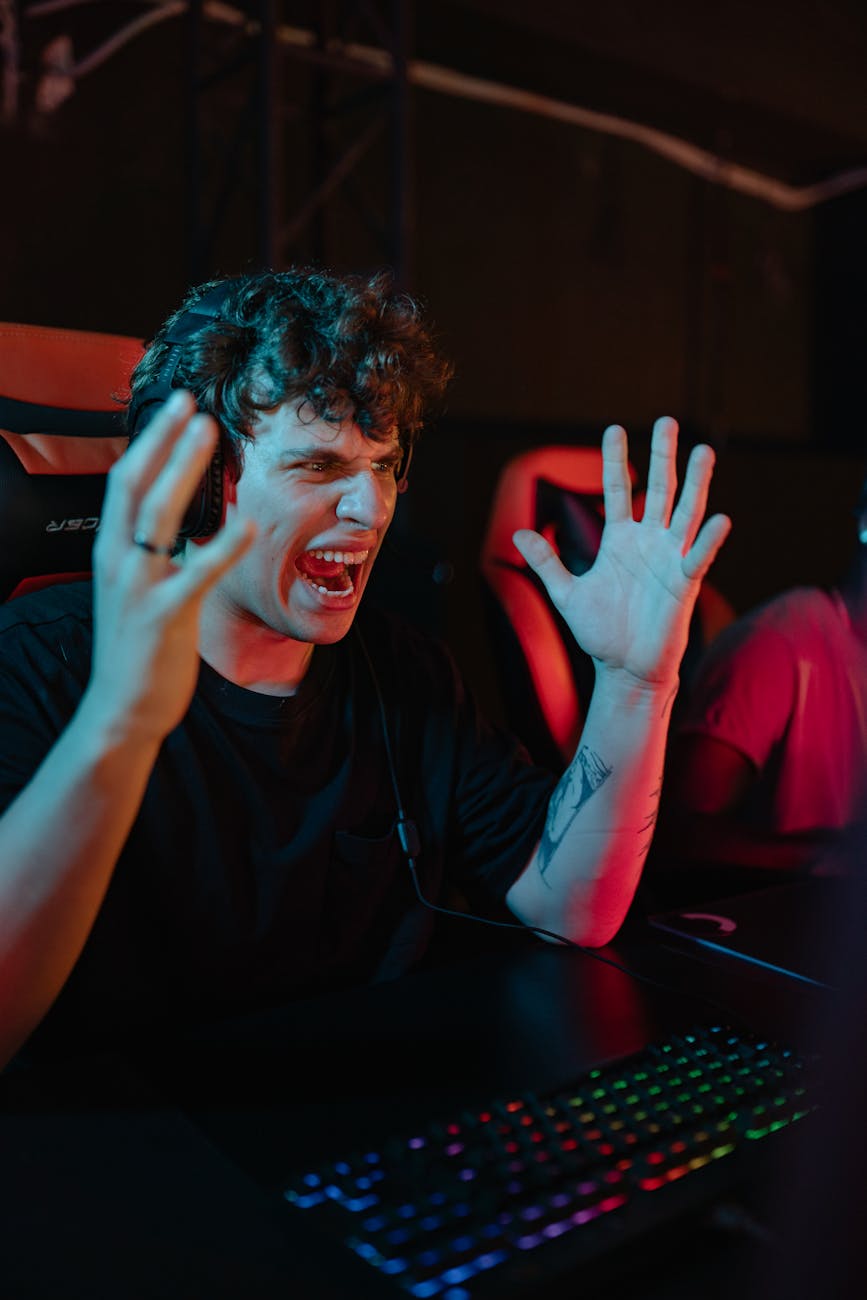
Rage quitting—it’s a term that us gamers know about all too well. Whether you’ve been the one to send your controller into the electronic after life in a fit of anger or watched a pissed off player exit mid-game, it’s a universal moment of what’s meant to bring us joy getting the best of us.
That boiling point where you just can’t handle another round of bad luck, the “game is cheating”, PC or internet lag, or a more skilled opponent can get rather hot. Rage quitting can feel like an act of reclaiming your dominance over an outcome that dominated you, but is it a healthy act of exerting your control by losing your s#%!?
Beyond that fleeting emotional release, continued rage quitting may be taking more of a toll on your mental health than you realize. Especially for streamers and content creators. So, let’s discuss the root source of rage quitting, and assess how we can overcome our emotions and have a more victorious experience. After all, I want to see you win. No pun intended.
Why Do We Rage Quit?

Rage quitting is more than a reaction in the heat of the moment. It’s a sign of how we deal with setbacks while doing something that is supposed to be fun. We’re hard wired to seek rewards and accomplishments which produce Dopamine.
Dopamine is the feel good “happiness hormone” that’s responsible for our rewards system that causes us to feel satisfied, happy and motivated when we accomplish our goals.
So, when our gaming experience that we looked forward to enjoying doesn’t turn out as expected, the negative outcome can be a real downer, and our brains can experience a spike in stress instead.
The Real Mental Health Fall Out of Rage Quitting
While rage quitting may feel good for the moment, it can potentially set up negative behaviors and patterns beyond the game. Let’s discuss.
- Elevated Stress Responses-
The continued act of rage quitting reinforces a habit of meeting our frustrations with anger. Overtime, this can make it harder to cope with real life situations that may stress us out in a positive and healthy manner.
- Lower Mental Resilience-
Think of frustration tolerance as a muscle. The more you train it, the stronger it gets. Rage quitting skips the workout, leaving you less equipped to handle tough challenges in video games and in life. Hard mode activated.
- Gaming Fatigue-
Gaming is supposed to be fun! Feeling frustrated constantly while playing video games can start to feel more like a source of stress than a source of joy. That can lead to burnout. Especially for those of us who live stream.
- Nightmares-
My cousin who has experienced this would kick my set up over for this, but having too many negative experiences in a video game can lead to having nightmares about it. Especially if you experience them before bed. Your brain goes into theta state before you are snoozing, and your subconscious can dream of them.
Psychologist Efrat Ginot, Ph.D. suggests that our dreams are created in the subconscious where they are searching for their path into our conscious awareness. They may also be seen as actions that bring hidden emotional memories and our sense of self to the surface.
So, when we have intense or negative experiences while gaming, they can linger in our minds, and show up in our dreams as a reflection of our underlying feelings. Your subconscious will take whatever you obsess over (or stress about) and throw it right into your dreams. My cousin is probably getting chased by Chucky as killer in Dead by Daylight in his dreams right now as I write this. After all, it’s almost 4 o’clock am.

- Relationship Ripples-
In multiplayer games, rage quitting doesn’t impact just you. Disconnecting early because you can’t deal with a not so desirable outcome can create tension with your friends, tarnish your reputation in the gaming community, not earn you GG’s, and get you kicked out of the discord by the homies. Spoiler alert: no one likes a rage quitter.
Transforming Frustration Into Growth
The good news is that rage quitting doesn’t have to be your default response. Here’s how you can “flip the script” and take control of your gaming experience.
- Pause Before the Rage-
Step away from the game when negative emotions arise. Even a five-minute break can help you shift your emotions and calm you tf down. If you stream, your viewers will understand if you put up that BRB screen for a bit and regroup.
- Game Smarter. Not Harder-
Figure out what’s frustrating you about the game. Is there a tech issue like bugs or a lag? Is there a lack of skills? Do you even know what you are doing? Focus on what the issue is, and what you can do to improve if you struggle at the game. Set the game on easy. Reduce the graphics quality. Go on YouTube University or Google the hard parts, and learn how to improve your gameplay. I sucked at Tropico 6, and made a whole notebook on how to get better. I eventually beat it!
- Level Up Your Gaming Environment-
Create a chill gaming setup that is calming—think music, cool lighting, or ergonomic gear to help keep your stress and comfort levels in check.
- Be Selective About Your Gaming Selections-
Take a break from that game or stop playing it all together. Don’t be a glutton for punishment. Choose games that resonate with you as a plater that align with your idea of fun. In the words of TLC “Stick to the rivers and the lakes that you are used to” lol.
Final Level: Make Gaming Fun Again
Gaming is meant to be entertaining. By taking control of how you handle frustration, you can reclaim what gaming is about: having fun. Let’s not allow rage to rob you of that.
Have you dealt with rage quitting before? How has it impacted your gaming habits or mental health as a gamer? Any tips on combating it? Let me know in the comments, and make sure you subscribe by entering your email below! I don’t want you to miss a thing.
I stream, too as @furycutitout! I’d love to have ya there! Give me a follow and let me know that you came from the blog! twitch.tv/furycutitout
Recommended posts: Rest Isn’t a Reward
Breaking Bad Habits Gently to Create Good Ones
Beyond the Winter Blues: How to Combat Seasonal Depression
The Positive Benefits of Coloring


 furycutitout.com
Leave a reply to Justin Cancel reply